C. Fred T. Andrus

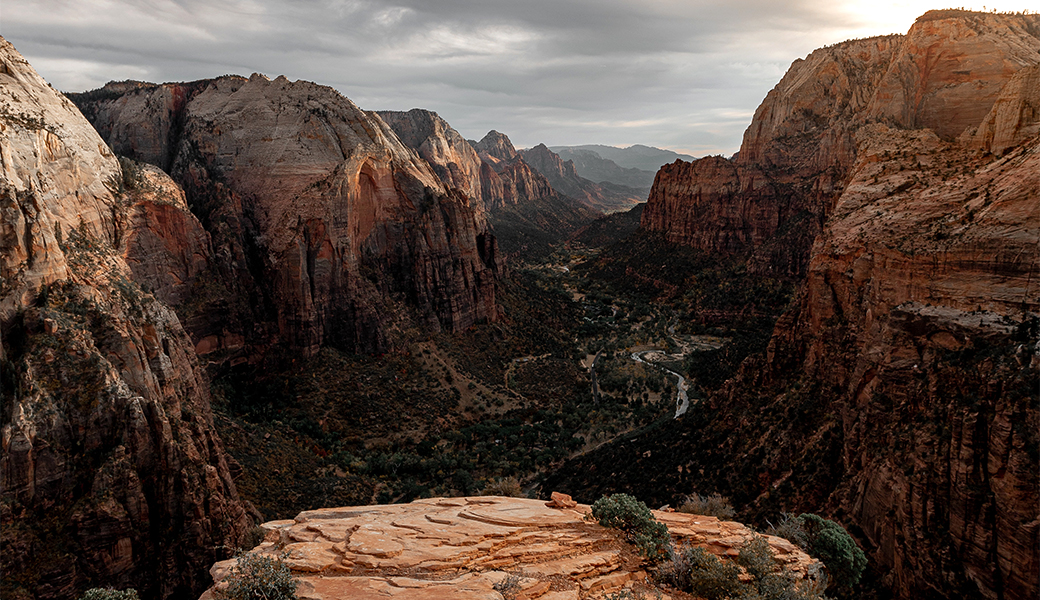
Interior western Cuba near Pinar del Rio.

Associate Professor

Contact

+1 (205) 348-5177
fandrus@geo.ua.edu
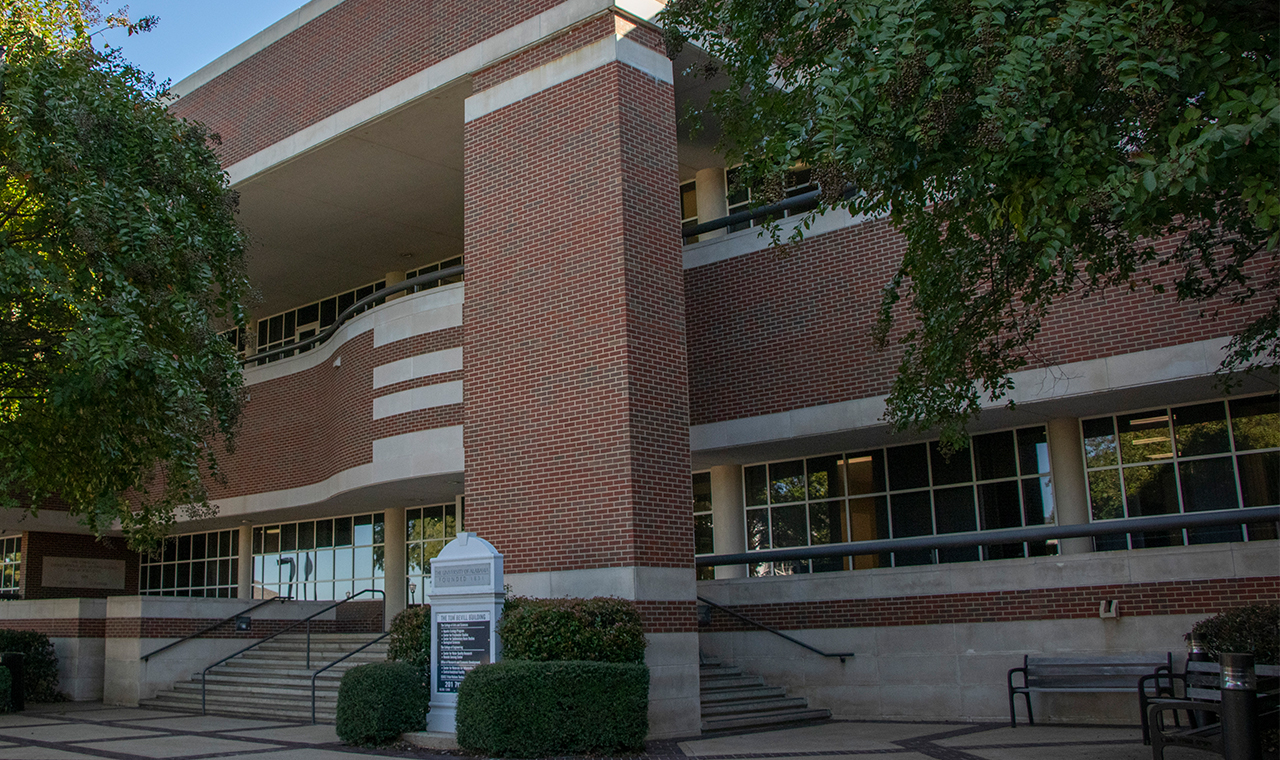
Office: 2040 Bevill Building
Fax: +1 (205) 348-0818

Department of Geological Sciences
The University of Alabama
Box 870338
Tuscaloosa, AL  35487  USA

Education

B.A. 1990, M.A. 1995 Anthropology, University of Georgia: Advisor – Betsy Reitz
Ph.D. 2000, Geology, University of Georgia: Advisor – Doug Crowe
Postdoctoral research: Savannah River Ecology Laboratory: Advisor – Chris Romanek

Research Interests

My research focuses on developing and applying new proxies relevant to reconstructing paleoclimate variation, often in the Pleistocene and Holocene. Methodologically, I focus on isotopic and elemental archives derived from microsampling accretionary carbonate skeletons. This sampling includes mollusk valves, corals, and fish otoliths. I have particular interest in reconstructing how climate influences organisms, including humans, especially as related to paleoecology.  This approach often necessitates the investigation of the life history of organisms that may act as paleoclimate indicators and the use of archaeological remains as a source of paleoenvironmental data.

Teaching

Dynamic Earth (Geo 101)
The Earth through Time (Geo 102)
Paleoclimatology/Climate Change (Geo 401/501)
Quaternary Climate and Environments (Geo 404/504)
Paleoclimate Seminar (Geo 626)
Advanced Methods in Paleoclimatology (Geo 601)

Related Links

Radiocarbon upwelling proxies:
I have been pursing upwelling-related research in coastal Peru and Chile for a number of years with several students and colleagues. Most recently Miguel Etayo (Ph.D. 2010), Christie Jones (MS 2010), and I measured radiocarbon profiles in various species of mollusks from the coast of Peru to better understand past  and present upwelling and radiocarbon reservoir effects associated with El Niño/Southern Oscillation (ENSO). This was part of a NSF funded project in collaboration with colleagues at the University of Maine and the University of Arizona. We are grateful to a large number of Peruvian archaeologists who are providing critical collaboration on this project. Several journal papers resulted from this work and more are being prepared for submission now.

Miguel and colleagues in the desert of Peru.

Miguel (far right) and colleagues at the ancient Peruvian city of Caral.

Mollusk growth and biomineralization:
My students and I study the biomineralization processes and sclerochronology of several
mollusk species. We are presently working on:

Crassostrea virginica
Mercenaria spp.
Pachychilus spp. – jute snails
Choromytilus chorus
Aulacomya ater
Atlantic, Pacific, and Gulf of Mexico Donax spp.
Rangia cuneata
Trachycardium procerum
Protothaca asperima

Christie Jones and Kelley Rich prepping samples in the lab.

Robin Cobb kayaking to her Rangia cuneata sample site in the Mobile-Tensaw Delta.

A gator eyeing Robin and I sampling in the Delta

Molluscan nitrogen isotopes:
Jestina Hansen (MS 2011) and I are working with a colleague at Dauphin Island Sea Lab (DISL)  to assess if nitrogen isotopes preserved in mollusks can give insight into past coastal and marine nitrogen variability. Jestina  focused on comparing different extraction methods.

Jestina extracting organic matrix from mollusk shell samples.

Tropical gastropod proxy development:

Kelley Rich (Ph.D. candidate) is examining the paleoclimatological utility of geochemical records contained in Central American gastropods (Pachychilus spp. – also called jute snails). These snails are common in Maya sites and Kelley hopes that their shell geochemistry may give insight into past rainfall patterns and season of capture.
She is monitoring streams in Belize, sampling wild snail shells, and growing snails under controlled conditions in our lab.

Kelley collecting data along the Mopán River, Cayo District, Belize.

Corals:
Robin Cobb (MS Marine Science student) and I are studying the geochemistry of deep water Stylasterid (e.g. Stylaster erubescens) corals to assess growth and biomineralization patterns. This research is funded in part by NOAA and we are collaborating with colleagues at NOAA and several universities. Descriptions of the cruises to the Charleston Bump and Blake Plateau can be found at:

http://oceanexplorer.noaa.gov/explorations/03bump/welcome.html

http://oceanexplorer.noaa.gov/explorations/04etta/welcome.html

http://sanctuaries.noaa.gov/missions/2010coral_east/welcome.html

We are also studying the geochemistry of the shallow water Stylaser roseus from the Caribbean in collaboration with colleagues from UA Biological Sciences.

Heather Black is investigating sub-fossil Stylasterid corals to better understand taphonomy and diagenesis that may impact geochemical analyses as part of her McNair research. Heather is the third McNair scholar I have had the pleasure to advise.

Near-shore reef in Cuba east of Havana.

Boarding Johnson Sea Link

Robin on board the RV Pisces guiding a ROV collecting deep sea corals.

Heather Black conducting X-ray diffraction analyses of sub-fossil corals.

Midden Geoarchaeology:
I am working with colleagues in many regions of North and South America using mollusk geochemistry, biogeography, and related techniques to study shell middens. Our goals are often to assess past human subsistence strategies, season of occupation and resource use, site formation processes, and other questions relating to archaeology.  I am presently conducting NSF-funded research into seasonality of subsistence practices along the northern Coast of the Gulf of Mexico with colleagues from UGA and USA. I am doing similar analyses from the Graveline Site, Mississippi excavated by colleagues here at UA. I have long-standing collaborative projects in the Georgia Bight investigating how midden sclerochronology can give insight into season of occupation, past subsistence strategies, site formation processes, and central place foraging models.

Miguel, Kelley, and I at the PAGES midden workshop in Hamilton, Ontario.

Oil Impacts on Oysters: Alberto Pérez-Huerta and I were recently funded to study the shell geochemistry of oysters exposed to oil and dispersant form the BP/Deepwater Horizon spill. We are working with colleagues from all across the region including DISL. Undergraduate Sara Glenn is now sampling the oyster at high spatial and temporal resolution in our micromill lab.

Other Projects:
I am working on several other issues that do not fit neatly in the above categories. Some examples include geochemical variation in Cretaceous clams from the Mississippi Embayment, fish migration patterns measured in otolith geochemistry, and sediment core proxies from estuarine and lacustrine environments in the Northern Gulf of Mexico. I have also begun exploring some projects in coastal China and recently traveled to visit Ocean University.

Yellow Sea coast, north of Qingdao, China

Students and I coring Mobile Bay. Kelley is at right

Representative Publications

Andrus C. F. T. 2012. Isotope sclerochronology in southeastern US archaeology to estimate season of capture. in Reitz, E. J, Quitmyer, I. R., and Thomas, D. H. eds. Seasonality and human mobility along the Georgia Bight. American Museum of Natural History Anthropological Papers v. 97. p. 123-133 (invited).

Andrus C. F. T. 2011. Shell midden sclerochronology. Quaternary Science Reviews 30: 2892-2905 (invited).

Andrus, C. F. T., and Thompson, V. D. 2011. Determining the habitats of mollusk collection at the Sapelo Island Shell Ring complex, USA using oxygen isotope sclerochronology: Journal of Archaeological Science 39: 215-228.

Thompson, V. D. and Andrus, C. F. T., 2011, Evaluating mobility, monumentality, and feasting at the Sapelo Island Shell Ring Complex: American Antiquity v. 76, 315-343.

Jones, K..B., Hodgins, G.W.L., Etayo-Cadavid, M. F., Andrus, C. F. T., and Sandweiss, D. H., 2010, Centuries of marine radiocarbon reservoir age variation within archaeological  Mesodesma donacium shells from southern Peru: Radiocarbon v. 52, p. 1207-1214.

Jones, Kevin.B., Hodgins, Gregory W.L., Andrus, C. Fred T., and Etayo-Cadavid, Miguel F., 2010. Interpreting molluscan marine reservoir ages in a variable-upwelling environment: Palaios.25: 126-131. DOI: 10.2110/palo.2009.p09-050r.

Jones, Kevein. B., Hodgins, Gregory W.L., Etayo-Cadavid, Miguel F., and Andrus, C. Fred T., 2009. Upwelling signals in radiocarbon from early 20th century Peruvian bay scallop (Argopecten purpuratus) shells: Quaternary Research 72: 452-456. DOI: 10.1016/j.yqres. 2009.07.008.

Romanek Christopher S., Beard, Brian L., Anbar, Ariel D. and Andrus, C. Fred T., 2009. Non traditional stable isotopes in the environmental sciences, in Aelion, C. M., Hohener, P., Hunkeler, D.,  and Aravena, R. eds., Environmental isotopes in bioremediation and microbial degradation processes. Boca Raton, FL , CRC Press, p. 383-433.

Andrus, C. Fred T., and Rich, Kelley W. 2008. A preliminary assessment of oxygen isotope fractionation and growth increment periodicity in the estuarine clam Rangia cuneata. Geo-Marine Letters. DOI: 10.1007/s00367-008-0109-3.

Reitz, Elizabeth J., Andrus, C. Fred T., and Sandweiss, Daniel H. 2008. Ancient fisheries and marine ecology of coastal Peru. In Human Impacts on Ancient Marine Ecosystems. edited by Torben C. Rick and Jon M. Erlandson, University of California Press. pp. 125-145.

Andrus, C. Fred T. and Crowe, Douglas E., 2008. Isotope analysis as a means for determining season of capture for Mercenaria. In Native American Landscapes of St Catherine’s Island, Georgia. edited by David Hurst Thomas. American Museum of Natural History, Anthropological Papers, 88: 498-518.

Andrus, C. Fred T., Sandweiss, Daniel. H. and Reitz, Elizabeth J. 2008. Climate change and archaeology: The Holocene history of El Niño on the coast of Peru. In Case Studies in Environmental Archaeology, (Second Edition). edited by Elizabeth J. Reitz, C. Margaret Scarry, and Sylvia J. Scudder. Plenum Press, New York. pp. 143-157.

Jones, Kevin B., Hodgins, Gregory W. L., Dettman, David L., Andrus, C. Fred T., Nelson, April, and Etayo-Cadavid, Miguel F. 2007. Seasonal variations in Peruvian marine      reservoir age from pre-bomb Argopecten purpuratus shell carbonate. Radiocarbon 49: 877-888.

Sandweiss, Daniel H.,  Maasch, Kirk A., Andrus, C. Fred T., Reitz, Elizabeth J., Riedinger-Whitmore, Melanie, Richardson, James B., and Rollins, Harold B. 2007 Mid Holocene Climate and Culture Change in Coastal Peru. In Climate Change and Cultural Dynamics: A Global Perspective on Mid-Holocene Transitions. Edited by David G.Anderson, Kirk A. Maasch, and Daniel H. Sandweiss, Academic/Elsevier Press. pp. 25-50.

Andrus, C. Fred T., Hodgins, Gregory W. L., Sandweiss, Daniel H., and Crowe, Douglas E. 2005 Molluscan radiocarbon as a proxy for El Niño-related upwelling variation in Peru. In Isotopic and Elemental Tracers of Late Quaternary Climate Change, edited by Donna Surge and German Mora. Geological Society of America Special Paper 395: 13-19.

Jones, Douglas S., Quitmyer, Irvy R., and Andrus, C. Fred T. 2005. Oxygen isotopic evidence for greater seasonality in Holocene shells of Donax variabilis from Florida. Palaeogeography, Palaeoclimatology, Palaeoecology. 228: 96-108.

Quitmyer, Irvy R., Jones, Douglas S. and Andrus, C. Fred T. 2005 Seasonal shell growth and oxygen isotopes (d18O) in the variable coquina clam, Donax variabilis Say, 1822: A modern analogue to determine the season of resource procurement during the Late Archaic Period of coastal northeast Florida, USA. In Archaeomalacology: Molluscs in Former Environments of Human Behavior. Proceedings of the Archaeomalacology Symposium of the 9th   International Council for Zooarchaeology. edited by Daniella Bar-Yosef Mayer. Oxbow  Press, Oxford, UK. pp.18-28

Sandweiss, Daniel H., Maasch, Kirk A., Chai, Fei., Andrus, C. Fred T., and Reitz, Elizabeth J. 2004. Geoarchaeological evidence for fish regime shift linked to multidecadal Pacific climate change. Quaternary Research 61: 330-334.

Jones, Douglas S., Quitmyer, Irvy R., and Andrus, C. Fred T. 2004 Seasonal shell growth and longevity in Donax variabilis from northeastern Florida: Evidence from oxygen isotopes. Journal of Shellfish Research 23(3): 707-714.

Andrus, C. Fred T. and Crowe, Douglas E. 2002. Alteration of otolith aragonite: Effects of prehistoric cooking methods on otolith chemistry. Journal of Archaeological Science. 29: 291-299.

Andrus, C. Fred T., Crowe, Douglas E., Sandweiss, Daniel H., Reitz, Elizabeth J., and Romanek, Christopher S. 2002. Otolith d18O record of mid-Holocene sea surface temperature in Peru. Science 295: 1508-1511.

Andrus, C. Fred T., Crowe, Douglas E. and Romanek, Christopher. S. 2002. Oxygen isotope record of the 1997-1998 El Niño in Peruvian sea catfish (Galeichthys peruvianus) otoliths. Paleoceanography 17(5): 1053-1060 – doi:10.1029/2001PA000652.

Andrus, C. Fred T. and Crowe, Douglas E. 2000. Geochemical analysis of Crassostrea virginica as a method to determine season of capture. Journal of Archaeological Science 27: 33-42

Weinand, Daniel C., Andrus, C. Fred T., and Crook, Morgan. R. 2000. The identification of cownose ray (Rhinoptera bonasus) as a seasonal indicator species and implications for coastal Mississippian subsistence modeling. Southeastern Archaeology 19: 156-162